

Summary: If you are in the furniture industry, you know that things aren’t always going smoothly. There are numerous factors that can derail you. That’s why we at TechBuzz Digital Marketing Company created this post to help you get more familiar with internet marketing for your furniture stores. We’ll help you through everything from setting up your website to developing content that resonates with your target audience and tracking what works. We will help you understand how digital marketing fits into the larger picture and how it may help your business thrive. Let’s dive in:
_____________________
Grow Your Furniture Stores with TechBuzz Digital Marketing
Digital Marketing for Furniture Stores | Social Media Marketing for Furniture Stores | Content Marketing for Furniture
Consumers looking for luxury furniture stores would have to go to physical stores or showrooms before the digital era. They would spend time browsing, comparing, and consulting with sales staff. This approach still exists, but there has been a drastic change in consumer behaviour over the last decade. Today’s consumers prefer to browse, research, and make purchasing decisions online.
A report by Statista shows that more than 50% of luxury buyers do their research online before making a purchase. Changing the way people shop for luxury goods means furniture stores need to be responsive to this new demand by creating an online presence that mirrors the luxury and exclusivity of their products. This is where digital marketing steps in, connecting furniture stores to consumers at every touchpoint from brand awareness to post-purchase loyalty.
B2B Ecommerce Trends for Manufacturers in 2026
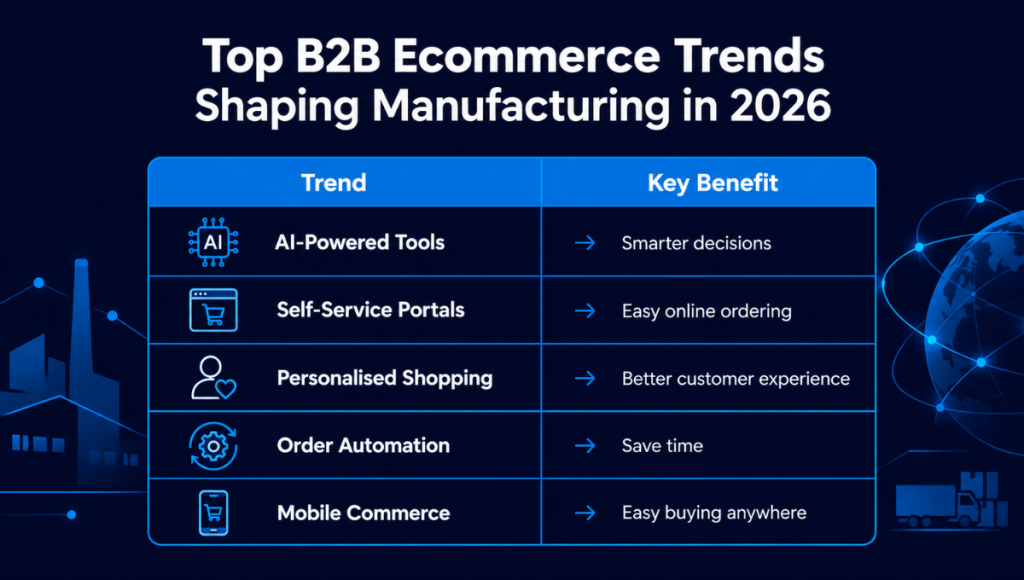
The Furniture Market is becoming more digital. Manufacturers, wholesalers, and retailers use online platforms to find suppliers, compare products, and manage orders. As a result, businesses need to make buying easier for their customers.
Here are some important eCommerce furniture trends to consider in 2026.
Online Buying Is Becoming More Common
Business buyers want quick access to product details, prices, dimensions, and delivery information. Therefore, manufacturers should provide clear product pages and simple enquiry forms. Wholesale customers should also be able to request quotations without unnecessary steps.
Product Visualization Is Improving
Customers want to understand how furniture stores will look before placing an order. High-quality images, videos, and interactive product previews can help them make better decisions. In addition, these features can reduce confusion about colours, materials, and sizes.
Personalized Shopping Experiences Matter
Different buyers have different needs. For example, a hotel may need furniture in bulk, while a retailer may want several designs in smaller quantities. Businesses can recommend suitable products based on customer interests and previous enquiries.
Search Visibility Supports Business Growth
Many buyers search online for furniture manufacturers, office furniture suppliers, and wholesale dealers. Consequently, businesses that invest in SEO can reach potential customers who are already looking for their products.
Trust Plays an Important Role
B2B buyers often place large orders. They need confidence in product quality, delivery timelines, and supplier reliability. Customer reviews, case studies, product specifications, and company information can help build that confidence.
7 Digital Marketing Ideas for Furniture Sales
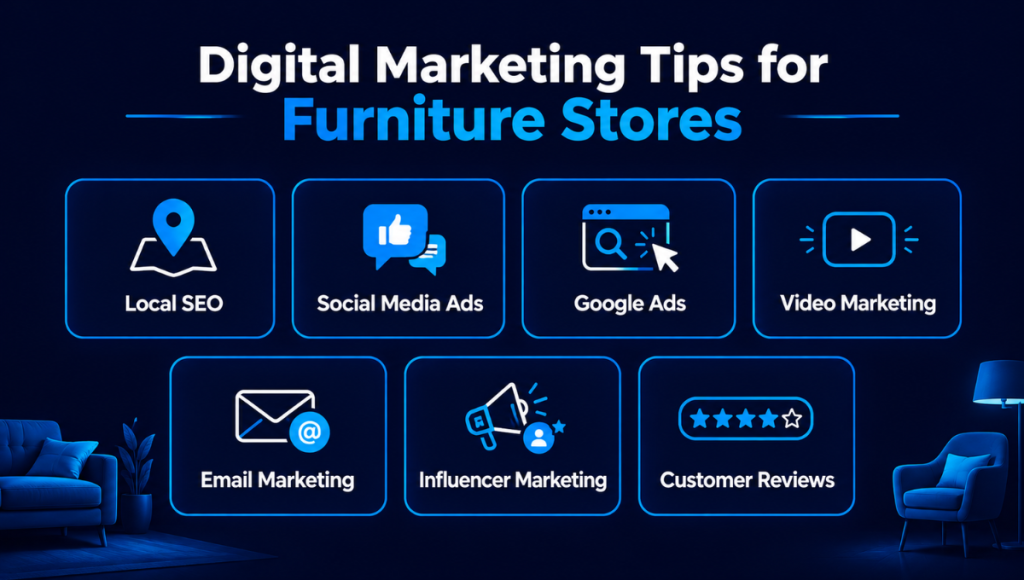
The right Digital Marketing Ideas can help furniture stores reach more people and increase sales. However, every business has different goals. A local showroom may want more walk-in customers, while an online store may focus on website purchases.
Here are seven practical ways to improve your marketing.
1. Implementing an Effective SEO Strategy
Search engine optimization helps your website appear when people search for furniture products and related services. A well-planned SEO Strategy can bring relevant visitors to your website without relying entirely on paid advertisements.
Start by researching the words customers use when looking for your products. For example, these may include sofa sets, bedroom furniture, office desks, dining tables, or custom-made wardrobes.
Next, use relevant keywords naturally in your page titles, product descriptions, headings, and website content. Each important product category should have its own useful page.
Also improve website speed, mobile usability, and navigation. Since many customers browse on their phones, a slow or confusing website can lead to lost sales.
Local SEO is equally important for physical showrooms. Keep your business name, address, phone number, and opening hours accurate. Also, create and maintain your Google Business Profile so nearby customers can find your store.
2. Turn Your Website Into a Product Visualizer With 3D Configurators
Furniture is a visual product. Customers often want to see how a sofa, bed, or dining table will look in their own space before buying it. This is where 3D product configurators can help. These interactive tools allow customers to change product colours, materials, finishes, and other features. Some advanced tools also let users rotate products or preview them in a room.
For example, someone shopping for a sofa could compare different fabric colours before choosing the best option. Similarly, a business buyer could customize office desks according to a project’s requirements.
Well-designed furniture configurators can make the shopping experience more engaging. They can also help customers understand their options without contacting your sales team for every small detail.
However, start with your most popular products. You do not need to add advanced features to your entire catalogue immediately. Instead, test a configurator on selected products and measure customer engagement.
3. Create Helpful Content That Supports Furniture Sales
Good content marketing for furniture helps customers make informed buying decisions. It also gives search engines more useful information about your website. Rather than publishing only promotional posts, answer the questions customers commonly ask before making a purchase.
For example, you can write about choosing the right sofa size, comparing wooden and engineered wood furniture, or selecting durable materials for busy homes. You can also create buying guides for office furniture, small apartments, and commercial spaces. These topics attract readers who may later become customers.
Additionally, use your blogs to guide readers toward relevant products. Consistent publishing can strengthen your website and help customers trust your expertise.
4. Use Social Media to Showcase Your Furniture
Visual platforms offer a great opportunity for furniture brands. With social media marketing for furniture store campaigns, businesses can show products in attractive settings and connect with potential buyers.
Instagram, Facebook, Pinterest, and TikTok can support different types of content, depending on your audience and available resources.
Try sharing:
- Short videos showing furniture details and finishes.
- Before-and-after room transformations.
- Customer photos and genuine testimonials.
- Product care tips and interior styling ideas.
- New arrivals, seasonal offers, and showroom updates.
5. Build Customer Relationships With Email Marketing
Email remains useful for keeping customers informed about new products, offers, and helpful buying advice. Thoughtful email marketing for a furniture store can encourage previous customers to return and help new leads move closer to a purchase.
Start by collecting email addresses with permission. You can offer newsletter sign-ups, product updates, or useful furniture guides.
Then, divide your audience into relevant groups. For example, people interested in bedroom furniture should receive different recommendations from customers exploring office desks.
Your emails can include new collection announcements, care tips, seasonal promotions, and complementary products. However, avoid sending too many messages. Focus on information that offers real value.
For B2B businesses, email outreach tools can help organize supplier introductions and follow-ups. Keep these messages relevant, professional, and compliant with applicable email marketing laws.
6. Use Paid Advertising to Reach the Right Customers
Paid advertising can help furniture businesses reach potential buyers more quickly. Google Ads can target people searching for specific products, while social media advertisements can introduce your designs to relevant audiences.
For example, you could run a campaign for dining tables in your service area. Alternatively, an online furniture store could promote a popular sofa collection to people interested in home improvement.
However, avoid sending every advertisement to your homepage. Create dedicated landing pages that match the product and message in each campaign.
Include clear product images, pricing where appropriate, delivery information, and a simple way to enquire or purchase.
7. Partner With Professionals in the Furniture Industry
Partnerships can introduce your brand to new audiences. Consider working with interior designers, home staging professionals, property developers, architects, and home improvement creators.
For example, an interior designer may feature your furniture in a completed project. In return, you can provide professional product images, accurate product details, and suitable promotional support.
You can also collaborate with property developers who need furniture for furnished apartments or show homes. For manufacturers, partnerships with retailers and commercial buyers may create valuable business opportunities.
How to Upsell and Cross-Sell Your Furniture (B2B and B2C)
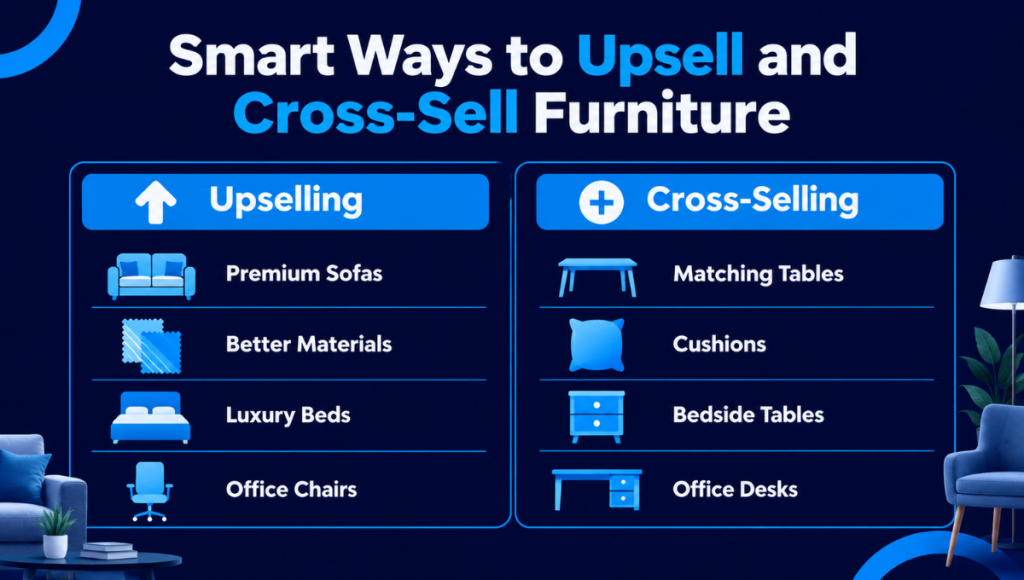
Furniture customers are more likely to purchase more than one thing for their environment. For example, a new sofa calls for a coffee table; a boardroom refit calls for matching storage. Learning how to upsell furniture and pair it with complementary pieces is one of the most effective ways to increase revenues without adding a single new lead to your sales funnel.
Cross-Sell vs Upsell: What’s the Difference?
Upselling encourages customers to choose a higher-value version of a product they already want. Cross-selling suggests additional items that complement their original choice.
For example, a customer interested in a basic sofa may choose a premium model with better fabric and extra comfort. This is upselling.
On the other hand, suggesting a matching coffee table, rug, or side table is cross-selling.
Both methods work in B2C retail and B2B sales. A homeowner may appreciate coordinated furniture suggestions, while a hotel buyer may need matching bedside tables, desks, and storage units.
Why Upselling and Cross-Selling Work So Well in Furniture Retail
Furniture purchases often involve several related items. A customer furnishing a bedroom may also need bedside tables, wardrobes, mirrors, and storage solutions.
Therefore, relevant recommendations can save time and help customers create a coordinated space.
You can introduce these suggestions in several ways:
- Display matching items on product pages.
- Offer complete furniture sets at clear prices.
- Recommend suitable upgrades during checkout.
- Create bundles for offices, hotels, and rental properties.
- Send personalized follow-up emails based on customer interests.
What to Consider: B2B vs B2C Furniture Buyers
Although both customer groups purchase furniture, their expectations can differ significantly. Understanding these differences helps you create better marketing messages and sales processes.
| Factor | B2B Furniture Buyers | B2C Furniture Buyers |
| Main goal | Meet business or project needs | Furnish a home or personal space |
| Order size | Often bulk or project-based | Usually individual or household orders |
| Buying priorities | Price, durability, quantity, and delivery | Style, comfort, quality, and price |
| Decision process | May involve several decision-makers | Often involves individuals or families |
| Content needs | Product specifications, catalogues, and quotes | Images, reviews, guides, and comparisons |
| Sales approach | Consultations and account management | Easy shopping and personalized support |
| Marketing channels | Search, email, industry networks, and LinkedIn | Search, social media, email, and local listings |
Use Separate Campaigns for Different Audiences
Avoid using the same message for every customer. A bulk buyer may respond to a detailed quotation and delivery plan, while a homeowner may prefer a room makeover video or a limited-time offer.
Create separate landing pages, advertising campaigns, and email lists for each audience. This makes your marketing more relevant and easier to measure.
Grow Your Furniture Brand With TechBuzz Digital Marketing Services
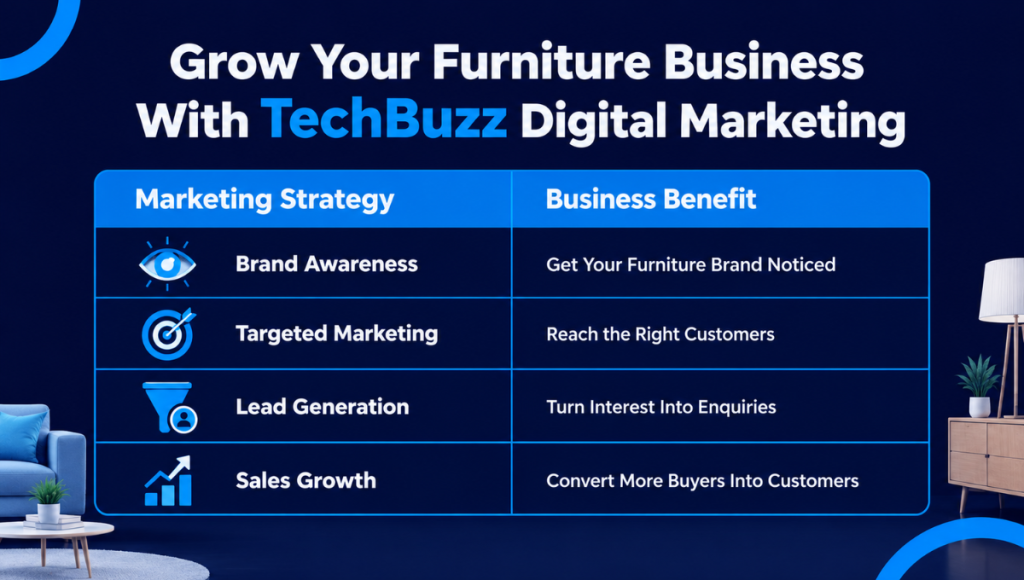
When you compare digital vs. traditional marketing, the online route is faster, more measurable, and often more cost-effective. It’s how you build awareness, drive traffic, and turn browsers into buyers—all without a massive storefront or ad budget. The future of furniture retail is digital—and now’s a great time to dive in.
We’re so glad you found us! Here at TechBuzz, we offer a full range of Digital marketing services. Learn more about how we can help your business get ahead by contacting our managers in an online chat!
Here is a short overview of how we can help you
-
Improve Search Rankings With Furniture SEO
Our SEO services focus on helping your website attract relevant organic traffic. We research suitable keywords, improve website pages, strengthen internal links, and identify technical issues that may affect search performance.
We also help businesses develop useful content around their product categories and customer needs. For local showrooms, we can work on location-based visibility and Google Business Profile optimization.
Although SEO takes time, consistent improvements can create a stronger foundation for long-term online growth.
-
Create Content That Helps Customers Choose
Our content team develops product descriptions, blogs, buying guides, landing pages, and other website content. We keep the language clear and focus on the information customers need before making a decision.
For example, a furniture brand may benefit from material comparisons, room planning guides, and product care articles. B2B suppliers may need detailed service pages, catalogues, and project-focused content.
We align each piece with your business goals and relevant search intent.
-
Strengthen Your Social Media Presence
We help furniture brands plan content that showcases products and encourages meaningful engagement. Depending on your goals, this may include promotional posts, reels, product highlights, customer stories, and campaign creatives.
We aim to keep your brand presentation consistent across relevant platforms. We also help shape calls to action that guide interested users toward product pages, enquiries, or showroom visits.
-
Reach Potential Buyers With Paid Campaigns
Our digital advertising services can help you target relevant audiences and promote selected products or services. We work with campaign goals, audience selection, ad messaging, landing pages, and performance tracking.
Instead of judging a campaign only by clicks, we focus on meaningful actions such as purchases, qualified leads, and quotation requests.
-
Turn Your Marketing Into a Clear Growth Plan
Furniture brands do not always need to use every digital channel at once. Some businesses should begin with SEO and local search, while others may benefit from improving product pages or running targeted advertisements.
At TechBuzz, we help identify suitable priorities and build a plan around your budget and resources. We also review performance data so your marketing can improve over time. If you keep looking for ways to improve your marketing and the service you provide to your community, you can cultivate a strong brand and set your business up for growth year over year.
Conclusion: Digital Marketing for Furniture Store
Many retailers are intimidated by the idea of furniture marketing. They’re worried it will be too difficult to implement. But no matter if your furniture store is large or small, advertising doesn’t have to be a dreaded obstacle. To get started on your marketing journey, you just need a professional team with a clear vision.
Want to improve your online presence? Contact us to discuss your furniture business and explore the digital marketing services in detail. You can check our blogs for more useful tips on SEO, content marketing, and online business growth.
Frequently Asked Questions
How Can Digital Marketing Help Furniture Stores Increase Sales?
Digital marketing helps furniture stores reach customers who are actively searching for products or exploring home design ideas. SEO can improve search visibility, while social media can showcase furniture styles and product features. Paid advertisements can promote selected collections, and email marketing can encourage repeat purchases.
How do you measure the success of your digital marketing efforts for furniture?
Keep an eye on the metrics that matter: website traffic, conversion rates, cost per acquisition, and return on ad spend. Tools like Google Analytics and platform insights will show you what’s working and what’s not. The key is to check in regularly, not just set it and forget it—then adjust based on what the data tells you.
Why Should Furniture Brands Hire a Digital Marketing Agency Like TechBuzz?
A digital marketing agency can help furniture brands plan and manage several marketing activities under one strategy. TechBuzz offers support with SEO, website content, social media marketing, and paid advertising. This can help businesses improve online visibility, present their products more effectively, and reach relevant audiences.