
Inbound and content marketing are not opposing strategies but complementary forces in a successful online marketing approach. Inbound marketing provides the structure to attract, engage, and retain customers, while content marketing delivers the value that fuels this journey. From persona-driven blogs to SEO, email nurturing, and customer retention strategies, content plays a vital role at every stage of the funnel. Together, they enhance brand authority, improve lead quality, and support long-term business growth. By aligning inbound tactics with targeted, high-quality content, businesses can build trust, drive engagement, and achieve measurable ROI through a customer-centric digital marketing strategy.
_____________________________________________________________
Content Marketing vs Inbound Marketing: A Complete Guide
Digital Marketing | Blogging | Pay Per Click
In today’s fast-paced digital marketing landscape, two powerful terms frequently dominate conversations among marketers and business owners alike: content marketing and inbound marketing. While they share overlapping goals, tools, and tactics, understanding the distinction and interplay between the two can significantly impact your overall marketing strategies. This comprehensive guide will explore what content marketing is, what inbound marketing is, and how to use both effectively for long-term growth.
What is Content Marketing?
Content marketing is a strategic marketing approach focused on creating and distributing valuable, relevant, and consistent content to attract and retain a clearly defined audience — and, ultimately, to drive profitable customer action.
Rather than directly pitching products or services, content marketing provides useful information that helps potential customers solve problems or understand topics better. It can take the form of blogging, videos, podcasts, infographics, e-books, white papers, and more.
Common Types of Content Marketing
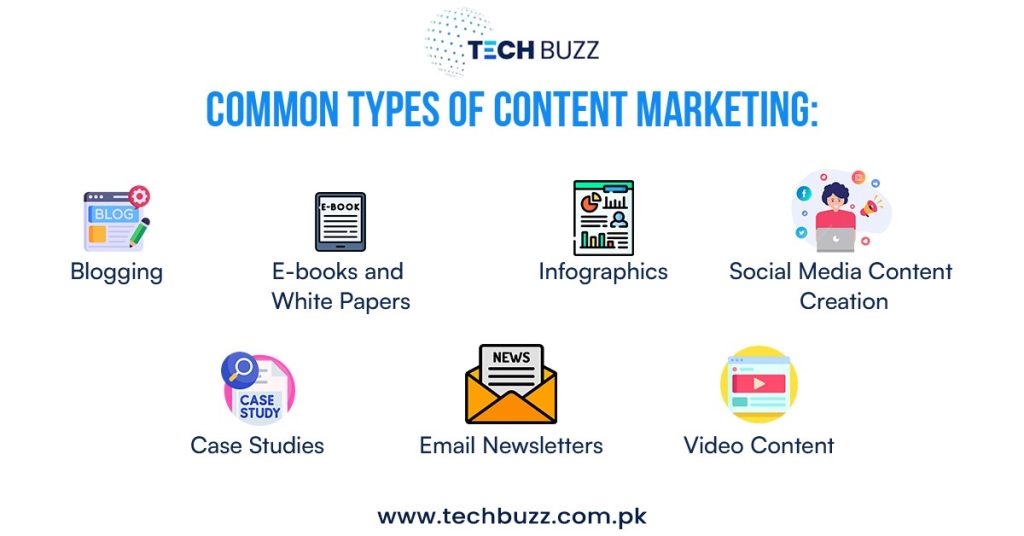
1. Blogging
Blogging remains a cornerstone of content marketing. It helps drive organic traffic from search engines, establishes thought leadership, and answers common questions from your target audience. Regular blog posts improve SEO, provide shareable content for social media, and position your brand as an industry authority. Successful blogs often include keywords, relevant visuals, and actionable insights.
2. E-books and White Papers
E-books and white papers offer in-depth information on industry topics and are excellent for lead generation. These long-form contents are typically gated, requiring users to provide contact details for access. While e-books are more visual and beginner-friendly, white papers are often more technical and data-driven, appealing to decision-makers and professionals seeking detailed analysis and solutions.
3. Infographics
Infographics simplify complex data into visually engaging content. They’re perfect for storytelling, educating audiences, and making statistics or processes easier to understand. Infographics are highly shareable on social media platforms and enhance engagement due to their appealing design and concise information format. They’re especially useful for breaking down step-by-step guides, comparisons, and survey results.
4. Social Media Content Creation
Social media content includes posts, stories, reels, polls, and other interactive formats tailored to platforms like Instagram, LinkedIn, Twitter, and Facebook. It’s essential for brand visibility, real-time engagement, and building a loyal community. The content can vary from promotional to educational, behind-the-scenes, or user-generated content, helping you stay connected with your audience and trends.
5. Case Studies
Case studies demonstrate how your product or service solves real-life problems for clients. They serve as proof of your expertise, build credibility, and help convert prospects by showing measurable results. A well-crafted case study typically includes the client’s challenge, your solution, the process, and quantifiable outcomes, making it a powerful tool in the sales funnel.
6. Email Newsletters
Email newsletters nurture relationships with subscribers by delivering valuable content directly to their inbox. These can include updates, blog highlights, exclusive offers, tips, or upcoming events. Effective newsletters have attention-grabbing subject lines, clear calls-to-action, and a mobile-friendly design. They’re ideal for maintaining ongoing engagement and driving traffic back to your website.
7. Video Content
Video content is one of the most engaging forms of marketing. It includes tutorials, product demos, testimonials, behind-the-scenes looks, and live streams. Videos can be used across platforms like YouTube, Instagram, TikTok, and your website. They boost retention, humanize your brand, and cater to audiences who prefer visual and auditory learning. Short-form and long-form video formats allow flexibility in storytelling.
What is Inbound Marketing?
Inbound marketing is a holistic marketing methodology that focuses on attracting customers through content and interactions that are relevant and helpful, not interruptive. Unlike traditional print advertising or pay per click campaigns, inbound marketing earns the attention of customers by aligning with their interests.
The inbound methodology typically follows four stages:
- Attract (via SEO content, social media, blogs)
- Convert (using landing pages, forms, CTAs)
- Close (with lead nurturing, email workflows)
- Delight (by offering exceptional post-purchase experiences)
Key Inbound Marketing Channels
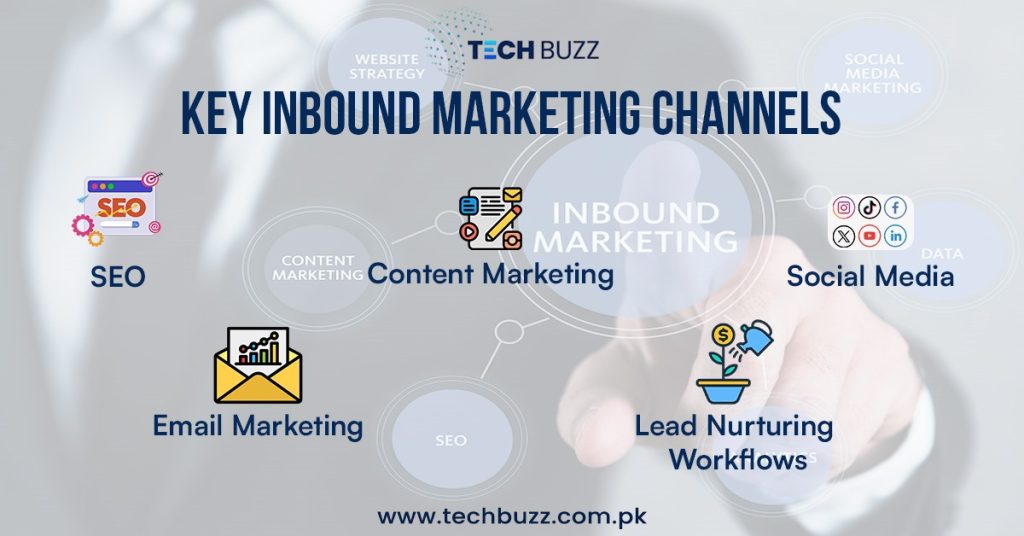
Inbound marketing leverages various channels to attract, engage, and convert prospects naturally. Each plays a unique role in building meaningful relationships and guiding leads through the buyer’s journey. Here are the core channels:
1. Search Engine Optimization (SEO)
SEO ensures your content ranks in search results when potential customers look for solutions. It includes keyword optimization, SEO audit, backlink building, on-page SEO, and technical improvements to drive organic traffic.
2. Content Marketing
High-quality, relevant content educates and informs your audience. Blogs, videos, case studies, and white papers serve as valuable resources that build trust and guide decision-making.
3. Social Media Marketing
Platforms like LinkedIn, Instagram, Facebook, and X (formerly Twitter) help distribute content, engage followers, build communities, and increase brand visibility through organic and paid strategies.
4. Email Marketing
Personalized email campaigns nurture leads, keep audiences engaged, and drive conversions. Drip campaigns, newsletters, and updates maintain consistent communication throughout the buyer’s journey.
5. Lead Nurturing Workflows
Automated workflows guide prospects from awareness to decision. By delivering the right content at the right time, these workflows build relationships and improve lead-to-customer conversion rates.
Content Marketing vs Inbound Marketing: Key Differences
Though they are often used interchangeably, there are core differences between content marketing and inbound marketing.
| Feature | Content Marketing | Inbound Marketing |
| Scope | Focused on content creation and distribution | Encompasses a complete customer journey |
| Objective | Attract and engage with informative content | Convert and nurture leads into customers |
| Tools | Blogs, videos, ebooks, infographics | SEO, email marketing, CRM tools, automation |
| Strategy | Tactic within the inbound strategy | Complete marketing strategy |
| Examples | SEO content writing, articles, and newsletters | Workflows, lead segmentation, and automation |
The Relationship Between Content Marketing and Inbound Marketing
Content marketing is a subset of inbound marketing. You cannot implement inbound marketing without content creation. In essence, content marketing powers inbound marketing by providing the fuel (content) that drives awareness, interest, decision, and advocacy.
Without high-quality SEO content, there is little to attract leads or nurture them. This means your content marketing strategy is crucial for successful inbound campaigns.
Benefits of Content Marketing
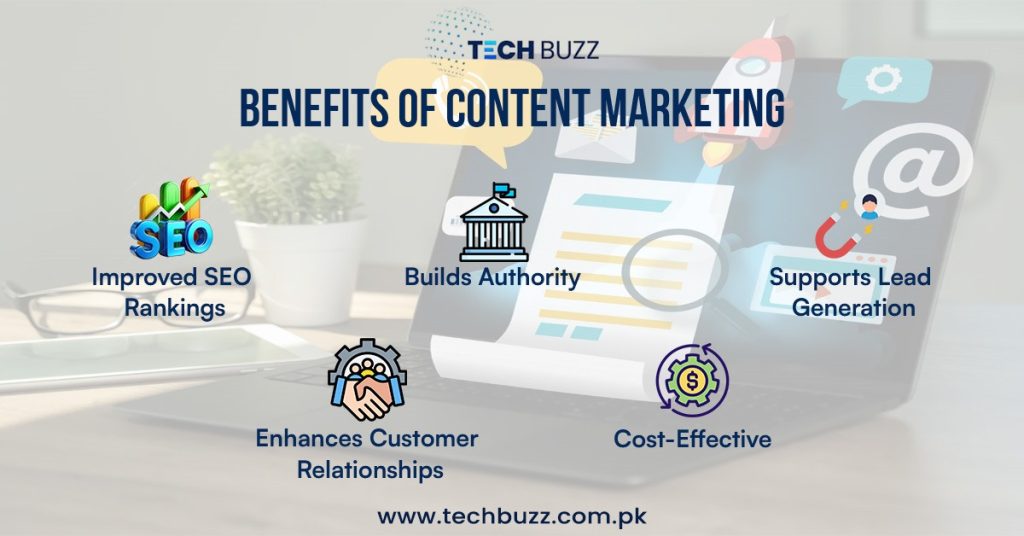
1. Improved SEO Rankings
Creating high-quality, relevant content helps improve your website’s search engine rankings. By targeting the right keywords and addressing user intent, content marketing enhances your visibility on search engines like Google. Consistently publishing blogs, guides, or FAQs increases your chances of appearing in top results, driving more organic traffic to your site over time.
2. Builds Authority
When you consistently share insightful, well-researched, and helpful content, your brand begins to be recognized as a reliable source of information in your industry. This credibility not only influences consumer trust but also improves brand perception, encouraging prospects and partners to choose your business over competitors.
3. Supports Lead Generation
Content marketing services attract and educate potential customers at different stages of the buyer journey. Gated content like e-books or webinars helps collect contact information, while blog posts and videos guide prospects through awareness, consideration, and decision-making stages, ultimately converting them into leads.
Benefits of Inbound Marketing
1. Non-Intrusive
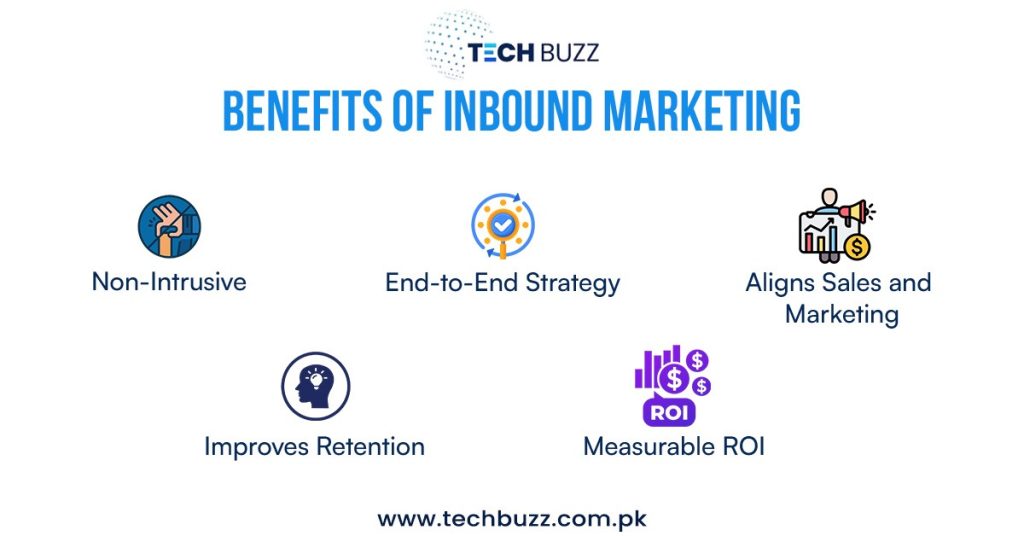
Inbound marketing attracts potential customers by providing content and experiences they’re actively looking for, rather than interrupting them with ads. This approach earns their attention naturally, leading to more engaged and higher-quality leads who are genuinely interested in your products or services. It builds trust from the start and creates a more positive brand perception.
2. End-to-End Strategy
Inbound marketing addresses every stage of the buyer’s journey—from awareness to consideration to decision and beyond. It offers tailored content and solutions that guide users through each phase, ensuring a seamless experience. This holistic approach helps nurture prospects until they are ready to convert and continues engaging post-purchase.
3. Aligns Sales and Marketing
Using tools like CRM systems and marketing automation, inbound marketing bridges the gap between sales and marketing teams. Both departments work toward common goals using shared data, improving communication and lead management. This alignment ensures that qualified leads are efficiently nurtured and handed off for conversion at the right time.
Content Marketing in Digital Marketing
In the broader types of digital marketing, content marketing plays a central role. It’s vital in driving traffic, building trust, and enhancing brand visibility across:
-
- Search Engine Optimization
- Email Marketing
- Social Media Marketing
- Affiliate Marketing
- Influencer Collaborations
Content Marketing and Public Relations
Combining content marketing with public relations enhances your brand’s visibility and credibility. While PR builds trust through media, content marketing deepens engagement through educational material. Both can amplify brand storytelling.
Content Marketing Tools You Should Know
Effective content marketing requires powerful tools. Here are a few to consider:
- SEMrush / Ahrefs – Keyword research and competitive analysis
- HubSpot – CRM and inbound automation
- Grammarly – Content editing and proofreading
- Canva – Visual content creation
- Google Analytics – Performance tracking
Content Marketing Planning
A successful content marketing campaign relies on thoughtful and strategic planning. By following a structured approach, businesses can ensure their efforts are targeted, consistent, and results-driven. Here’s how to plan effectively:
Define Goals
Establish clear, measurable objectives. Whether it’s increasing website traffic, generating leads, or building brand awareness, your goals will shape your strategy and content types.
Know Your Audience
Understand your target audience’s demographics, interests, pain points, and behavior. Create buyer personas to guide tone, messaging, and content relevance.
Conduct Keyword Research
Identify keywords and search phrases your audience uses. This helps in crafting SEO-friendly content that improves visibility and attracts organic traffic.
Choose Content Formats
Select formats that best suit your audience and objectives blogs, videos, infographics, podcasts, case studies, or white papers. A diverse content mix boosts engagement.
Create a Calendar
Develop a content calendar to plan publishing schedules, assign tasks, and maintain consistency. Include themes, formats, and distribution channels for each piece.
Distribute and Promote
Share content across appropriate channels social media, email newsletters, websites, and third-party platforms. Paid promotions can further amplify reach and visibility.
Analyze Performance and Optimize
Track KPIs like engagement, traffic, conversions, and bounce rate. Use insights to refine your strategy, improve underperforming content, and capitalize on successful tactics.
Online Marketing Strategy Using Inbound & Content Marketing
An effective digital marketing approach seamlessly combines inbound marketing principles with strategic content creation. This fusion not only attracts and converts leads but also builds long-term customer relationships. Here’s how to build a results-driven strategy:
Start with Persona-Based Content
Begin by developing detailed buyer personas to understand your target audience’s goals, challenges, and behavior. Use these insights to create valuable, personalized content, such as blog posts, videos, guides, or social media content, that directly addresses their needs. This relevance improves engagement and positions your brand as a trusted solution provider.
Use SEO and PPC for Initial Visibility
Boost your content’s reach with a dual approach:
- SEO helps improve organic visibility by targeting keywords your audience is searching for.
- PPC (Pay-Per-Click) campaigns ensure immediate traffic by placing your content in front of the right people through platforms like Google Ads or social media.
Together, these tactics drive qualified traffic to your website early in the funnel.
Convert Leads with Optimized Landing Pages
Once users arrive on your site, capture their interest with targeted landing pages. These should be designed with clear messaging, persuasive calls-to-action (CTAs), and lead forms. Offer gated content like e-books, white papers, or free trials in exchange for contact information to grow your email list.
Nurture with Email Marketing
With your leads collected, use automated email campaigns to guide them through the buyer journey. Deliver personalized, value-rich emails that educate, build trust, and gently prompt action. Segment your audience based on interests or behaviors to improve relevance and open rates.
Retain Through Consistent, Helpful Content
Don’t stop at the sale, use content to continuously add value and keep your customers engaged. Share how-to articles, product updates, FAQs, and exclusive resources that enhance their experience. This not only boosts retention and satisfaction but also encourages referrals and repeat purchases.
All You Need to Know About Tech Buzz Agency
Tech Buzz Agency is a dynamic type of marketing and technology-driven firm that specializes in helping businesses grow through innovative strategies, cutting-edge tools, and impactful brand storytelling. Whether you’re a startup looking to build your online presence or an enterprise seeking digital transformation, Tech Buzz Agency positions itself as a full-service partner in your success journey.
Core Services
Tech Buzz Agency provides a wide range of services designed to boost visibility, engagement, and conversion:
- Digital Marketing
SEO, SEM, PPC, and social media strategies tailored to drive qualified traffic and measurable ROI. - Content Marketing
Creation of blogs, infographics, case studies, email campaigns, and video content designed to educate, convert, and retain audiences. - Inbound Marketing
Persona-based content strategies, lead generation funnels, CRM automation, and nurturing sequences to attract and engage high-quality leads. - Web Design & Development
Mobile-responsive websites, e-commerce platforms, and UI/UX-optimized interfaces that reflect your brand and drive conversions. - Brand Strategy
Identity development, storytelling, and positioning services to help your brand stand out and connect with its audience. - Analytics & Reporting
Real-time performance tracking, KPI monitoring, and actionable insights to guide data-driven decision-making.
What Makes Tech Buzz Agency Unique?
- Integrated Approach: Blends inbound, content, and performance marketing for holistic growth.
- Client-Centric: Custom strategies aligned with business goals, industry trends, and target audiences.
- Innovation-Driven: Stays ahead of digital trends, AI tools, and automation techniques.
- Results-Focused: Emphasizes ROI, long-term scalability, and real-time optimization.
Industries Served
Tech Buzz Agency caters to diverse industries, including:
- Tech Startups
- E-commerce & Retail
- SaaS Companies
- Health & Wellness
- Real Estate
- Finance & Professional Services
Client Success Stories
The agency has helped brands improve lead generation by over 70%, reduce bounce rates through website redesigns, and achieve 3x more engagement on social platforms backed by real-time analytics and transparent reporting.
Why Choose Tech Buzz Agency?
- Experienced team of strategists, creatives, and developers
- Proven track record of scaling businesses
- Agile workflow with ongoing client collaboration
- Transparent pricing and performance tracking
Contact Tech Buzz Agency
Interested in transforming your brand? Reach out through:
- Website: Tech Buzz
- Email: techbuzzpk@gmail.com
Final Thoughts
Rather than viewing content marketing vs. inbound marketing as competing strategies, it’s more productive to understand and leverage their synergy. Content marketing is not just a component—it’s the driving force that fuels the inbound marketing engine. While inbound provides the strategic framework for attracting, engaging, and delighting customers, content delivers the value and messaging that guides them along that journey.
In today’s digital landscape, brands that master the balance between inbound strategy and quality content creation will stand out, connect more deeply with audiences, and sustain lasting success.
Is content marketing part of inbound marketing?
Yes, content marketing is a key component that fuels the inbound marketing methodology.
Can you do inbound marketing without content?
Not effectively. Content is essential to attract, convert, and delight customers.
What are the best types of content for inbound marketing?
Blogs, ebooks, videos, email series, case studies, and SEO-optimized landing pages.