
Summary: Organic marketing is building visibility through SEO, content, and social media without having to pay for it. It takes longer than paid advertising, but it creates long-term, compounding effects – traffic and authority that stay with you even when the effort stops. In a good plan, you use a combination of organic marketing and paid advertising, where paid is used for short-term goals, and organic marketing lays the foundation for the future.
____________________________________________
Organic Marketing 101: How TechBuzz Drives Real Results for Growing Businesses
Content Marketing | Paid Marketing | Organic Digital Marketing
Most people see two choices: either they use paid advertising to get instant results, or they only do organic marketing. The truth is somewhere in between; however, in practice, most small to mid-size companies get their results through organic marketing. Organic marketing may take more time to build, but it doesn’t require ongoing payments to get clicks.
TechBuzz works across a genuinely widespread range of industries — home improvement, healthcare, software, restaurants, furniture, pharmacies, garments, cosmetics, and entrepreneurship — serving clients across the UK, US, Saudi Arabia, Pakistan, and Canada.

Organic impressions and click trend over 3 months — steady, compounding growth as content and technical SEO work builds momentum.
What is Organic Marketing, Exactly?
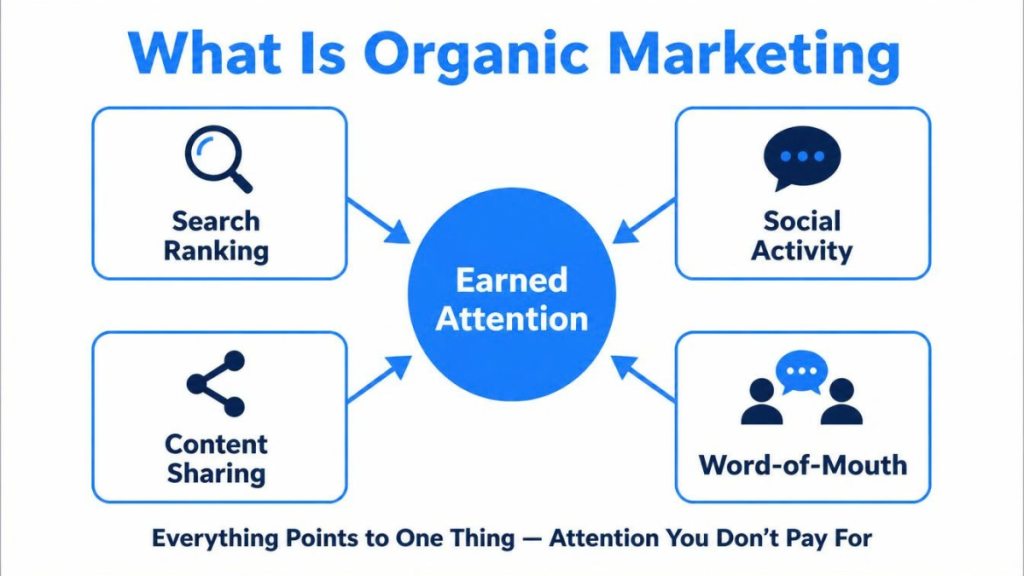
Organic marketing involves attracting your customers without paying for placement, through your search ranking, social activity, content sharing, and word-of-mouth marketing. Organic marketing is the exact opposite of paid advertising.
In the case of asking what organic marketing is in simple terms, the answer would be straightforward: it’s the attention you earn. You earn it by providing valuable content, valuable information, a proper website structure, and activities that the search engines will see as being worthy of their attention. It’s not a free process, in the way that it requires time and skillful people to make it happen, but you are not paying per click or per impression.
Organic VS Paid Marketing: Where Each Of Them Belongs
There is no real fight between organic and paid marketing because each of these types works better in some spheres than the other.
What You Get from Paid Marketing
Paid marketing gives you instant exposure. If you need immediate attention, advertising will provide you with such visibility because it is just the purchase of certain placements, and these placements vanish after the budget runs out. It is perfect for trying new offers, boosting sales, or getting into the competitive market quickly.
What You Get from Organic Marketing
Organic marketing provides sustainable results. This type is slower because results come in the form of traffic, which becomes visible only after some period of time — usually after a few months of optimization and when your rankings have changed — but it converts at a much more beneficial cost and builds more trust because it is always easier to believe in something organic rather than to trust “Ads”.
The companies that expand rapidly are the ones that move hand-in-hand — paid ads fill in the gaps while organic energy gathers beneath the surface. Once you have built your organic base, you can cut back on your advertising budget without seeing your traffic drop off a cliff.
Core Pillars of the Organic Marketing Strategy
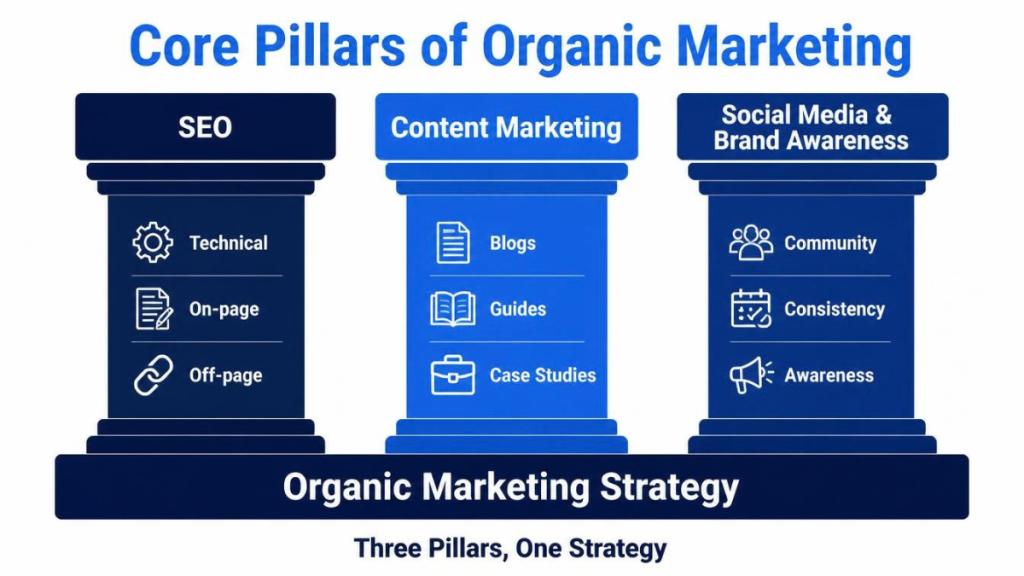
There is no one thing that makes up an organic marketing strategy; rather, it consists of several interrelated disciplines.
Search Engine Optimization
Organic SEO marketing strategy is typically the foundation for growing organically in any website-based company. This discipline consists of three types of actions: technical (speed optimization, mobile optimization, clear URL structure), on-page (title tags, description, header hierarchy), and off-page (backlinks, citations, brand mentions).
However, there is one more thing that is frequently forgotten, which is called keyword cannibalization. It happens when multiple webpages compete for the same keywords on a site, confusing search engines and minimizing their ranking. What needs to be done to achieve an effective organic SEO marketing strategy is to create a unique webpage with a certain keyword focus that does not interfere with other pages on the same domain. Semantic SEO comes into play here, as well — search engines appreciate content that addresses a topic comprehensively, using the related terminology.
Content Marketing
A content marketing campaign ensures that your organic efforts have something to rank and promote. While blog posts, guides, case studies, and downloadable resources each play their own role, the common element between them all is the fact that they all provide answers to the questions your potential customers have. Quality content marketing is never about producing content endlessly; instead, it is better to invest in one thoroughly researched piece of writing that ranks highly for some relevant keyword.
Organic Social Media Marketing and Brand Awareness
Organic social media marketing involves developing a community of users who will interact with your brand due to the quality of the content and not the paid reach. Unfortunately, platforms make organic reach difficult, thus annoying many entrepreneurs. However, it still works when it comes to consistency and proper content that is in line with the culture of the platform in question. It serves as a base for the brand awareness strategy since people tend to remember brands they have engaged with, even if it was casual.

How Organic Growth Strategy Turns Into Actual Results
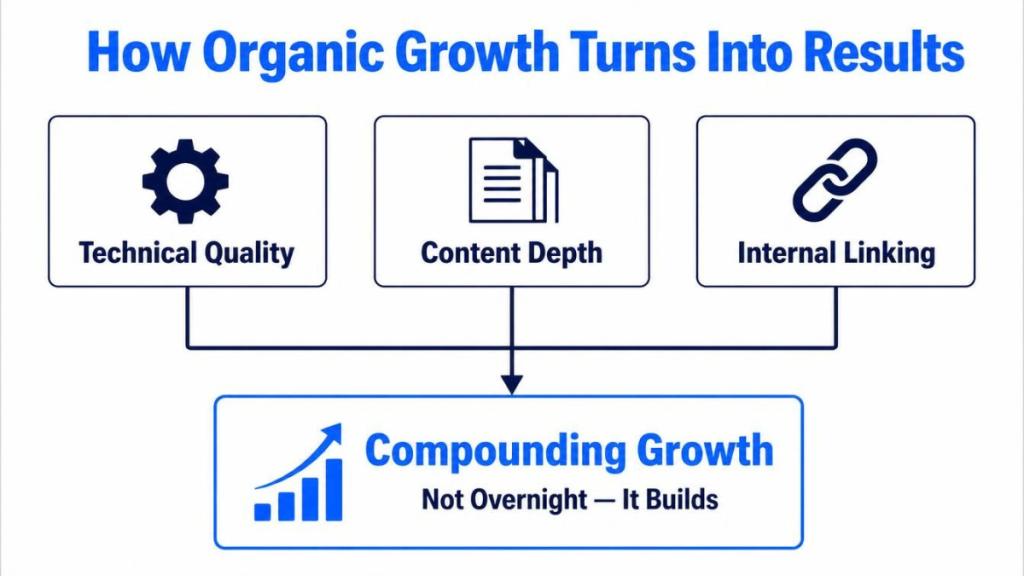
Organic business growth is more than simply appearing on Google. It’s a network where your website, content, and social accounts promote each other. That means you’ll continue attracting new clients even without spending money on ads all the time. This is what makes organic business growth compound. Every optimized website keeps working for you. Every ranking piece of content keeps working for you too — regardless of whether you continue advertising or not.
There are three consistent ways to get organic traffic growth: technical website quality, content depth rather than quantity, and linking between your pages. Organic search ranking improvements do not come overnight, which is why the companies that achieve the best results treat it as an ongoing process.
Now, let’s take a look at this concept applied by our clients from TechBuzz.
How TechBuzz Creates Genuine Organic Results, Niche by Niche
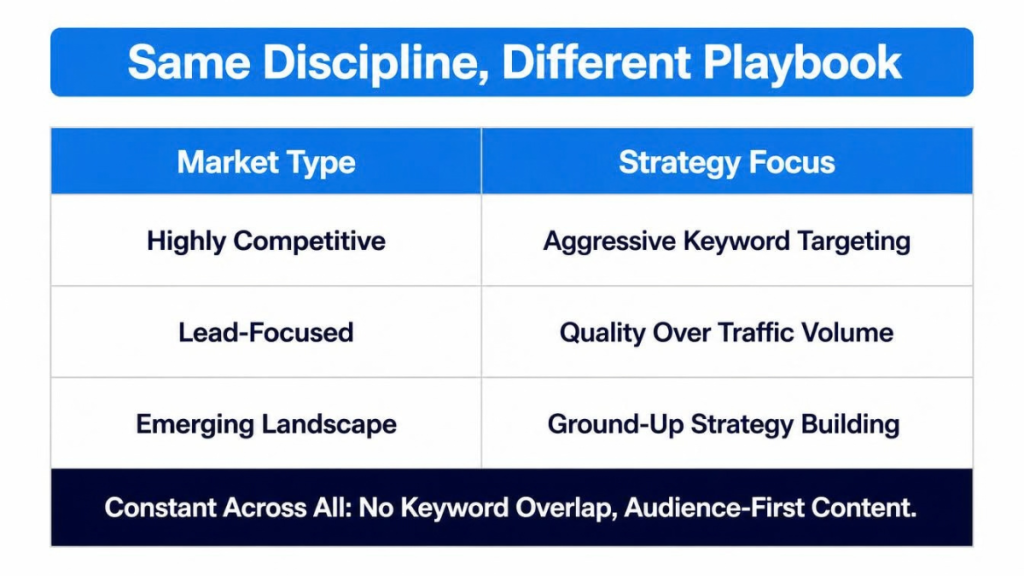
TechBuzz spans a variety of niches – ranging from home improvement, health care, software, restaurants, furniture, pharmacy, clothing, cosmetics, and even entrepreneurship – catering to businesses in markets such as the UK, US, Saudi Arabia, Pakistan, and Canada. From what we’ve learned is that there is no one-size-fits-all approach to delivering the desired outcome for all of those businesses. The organic digital marketing strategy needs to cater to the product, the target market, and what “results” means.
Different Niche SEO Results
Sometimes, our clients require us to create an organic SEO marketing campaign that is built on a competitive keyword set — a UK uPVC windows client requires content which will be competitive in a very crowded transactional market. Sometimes, our clients need an organic SEO marketing strategy built on a specific keyword base.
The goal there is to generate leads, not traffic. Our Saudi software client, however, requires a completely different kind of strategy. That’s because of a completely different kind of competitive landscape. The one thing that is constant is the discipline behind it all. It’s technical SEO work, keywords that don’t cannibalize each other, and content that answers the questions of the audience.
Content Marketing: The Qissa Restaurant and Sultan Yakhni Pulao Case Study
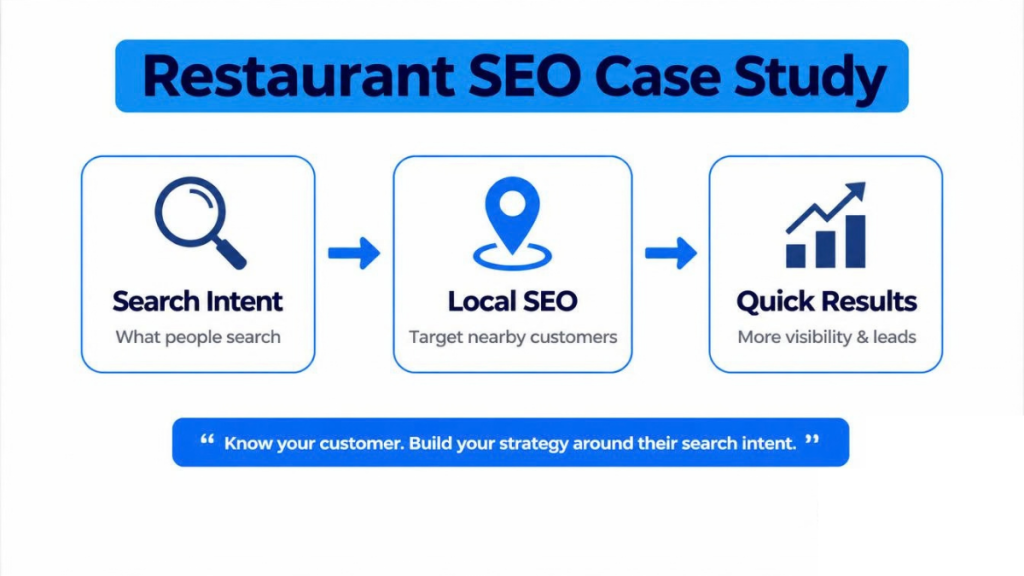
One of the most vivid examples of how content marketing strategies quickly start to bring results is related to the restaurant niche. For a restaurant, success depends heavily on local SEO. When content is built around people’s actual search intentions, the results tend to show up fast. It’s a niche where speed and search intent go hand in hand.
Qissa Restaurant
For Qissa Restaurant, creating content based on how people search when deciding where to eat — location, cuisine, specific dishes — led to quick, visible traction. Being reachable exactly when local, hungry searchers were looking made the difference.

Qissah Restaurant Pk’s Instagram growth — organic social results alongside the content and local SEO work.
Sultan Yakhni Pulao
The same approach applied to Sultan Yakhni Pulao, where content aligned with local search intent brought fast results as well — reinforcing that this isn’t a one-off outcome but a pattern that holds across restaurant clients.

Sultan Yakhni Pulao’s growing online presence — the same content and local SEO approach applied consistently.
The difference in timelines is another nuance worth considering in digital marketing for businesses. Strategies don’t all pay off at the same speed. A restaurant chasing relevant local search intent gets quicker results. A B2B company trying to win through broad keywords takes longer. Knowing who your client is matters. It’s what lets you build a genuinely data-driven marketing strategy instead of a generic one.

Organic Social Media Marketing: Where TechBuzz is Especially Strong
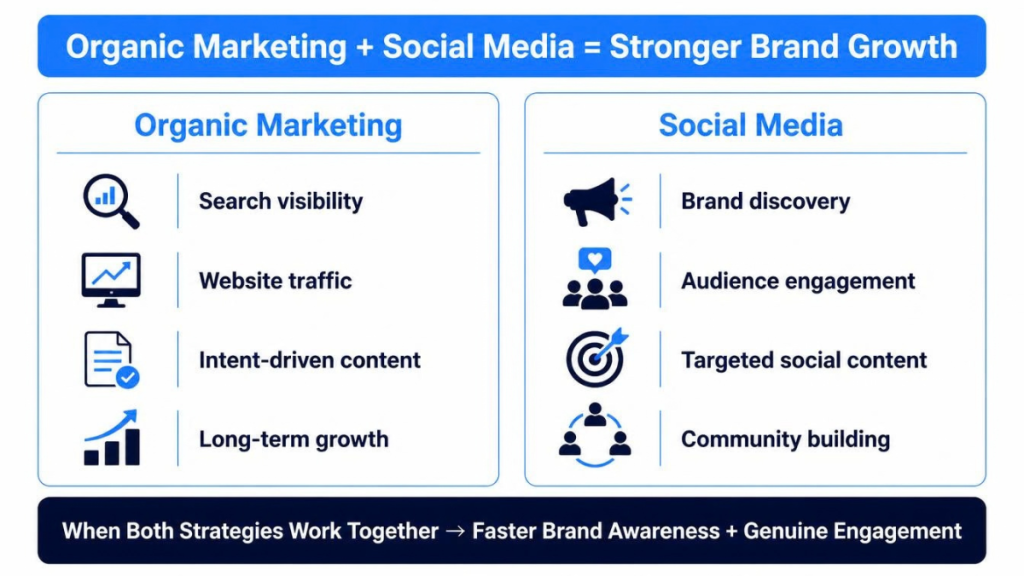
Where TechBuzz excels and exceeds expectations when it comes to its performance is in the realm of organic social media marketing. In different client accounts, including those of restaurants, we’ve created social media content based on the preferences of the target audience. The result has been true engagement, not vanity metrics. The truth is, social media sites have become discovery channels in their own right. Customers now discover businesses through their social media profiles even before they use Google to do so.
Qissa Restaurant’s Instagram (@qissahpk) and Sultan Yakhni Pulao’s Instagram (@sultanyakhnipulao) are both proof of this — steady, organic follower growth built without paid promotion.
The very intersection of the two strategies is exactly the point. It’s precisely why organic marketing strategy and social strategy should not be pursued separately. When both strategies are aligned, they build brand awareness much more quickly than either channel can do alone.
Turning Niche Results Into a Repeatable Customer Acquisition Strategy
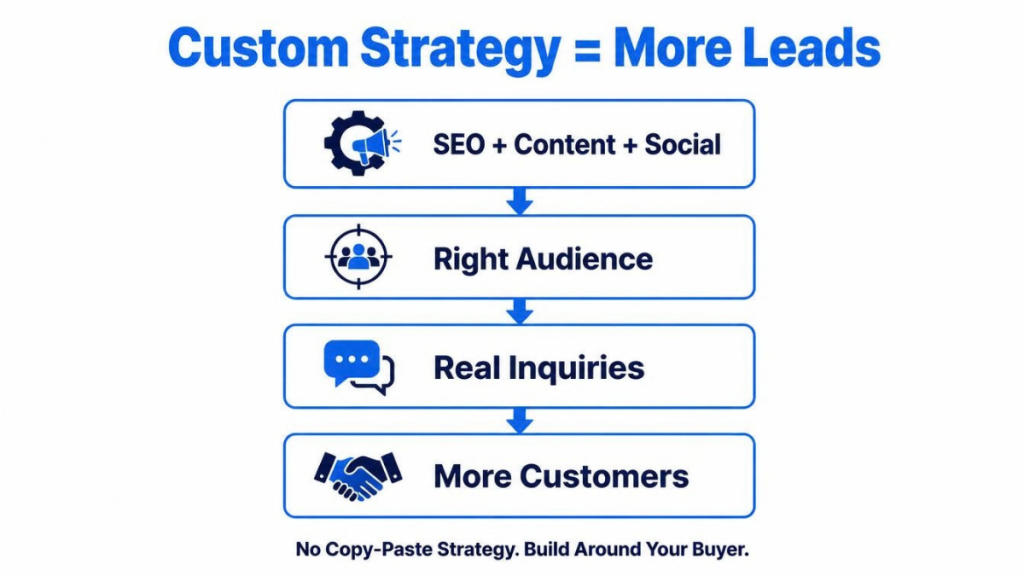
What links all of this together—windows, health care, software, and restaurants—is one thing. TechBuzz doesn’t take a copy-and-paste approach for each client. Every customer acquisition strategy is built around that specific business and its actual buyer.
If you want to see what a tailored organic strategy could look like for your business, get in touch with TechBuzz — we’re happy to walk you through it.
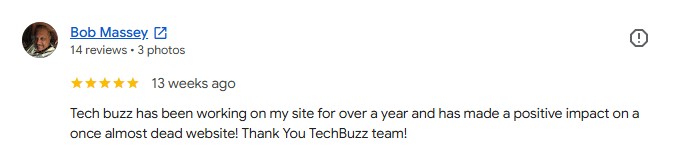
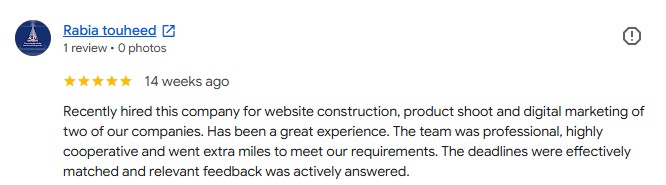
Bringing It All Together
Organic marketing is not about taking shortcuts, and anybody who tells you otherwise is being untruthful to you. However, when it is done right, it develops something that paid marketing cannot. It builds visibility that lasts. It builds trust that compounds. And it creates traffic that remains even when the money runs out. Want to see more on how organic strategy plays out in practice? Check out our blog for more insights from the TechBuzz team.
Frequently Asked Questions
What is the difference between organic and paid marketing?
Organic marketing acquires visibility through SEO, content, and social interactions. Its implementation is slower compared to paid marketing, but its effect stays without further ad expenditures. Paid marketing acquires visibility through ads, and its effect stops the minute you stop paying.
How long does it take for organic marketing to bring results?
It depends greatly. A small business such as a restaurant will acquire quick results due to targeting local searches of high intent. On the other hand, B2B and Healthcare companies will take more time due to targeting more complex queries – most likely a few months.
Which one is better for a small business: organic or paid marketing?
There is no better option here. Organic marketing will provide lower customer acquisition costs in the long run, whereas paid marketing will provide quick visibility during development of organic foundations.