
Summary: This step-by-step guide shows how to create winning social media advertising. It covers setting clear goals, targeting the right audience, crafting compelling creative, optimizing budgets, testing strategies, and analyzing metrics to scale success – perfect for marketers and business owners.
__________________________________________________________
How to Create Winning Social Media Advertising Campaigns | Step-by-Step Guide
Social Media Ads Cost | Paid Social Media | Social Media Marketing
Create social media advertising that works by starting with clear goals – whether chasing sales, generating leads, building brand awareness, or growing your follower base. Know exactly who you’re talking to by defining your target audience based on their interests, habits, and demographics. Then make eye-catching visuals and straightforward copy that speaks directly to their needs and highlights what makes your offer unique. Set a budget that makes sense for your business, test different versions of your ads to see what performs best, and check key metrics regularly. Use what you learn to refine your approach and make every campaign even stronger.
What are the Benefits of Social Media Advertising?
Social media advertising is a powerful tool that helps businesses connect with their audience and grow. Here are the key advantages:
Targeted Reach
You can show ads only to people who match your ideal customer profile – based on age, location, interests, job, and online behavior. This ensures you don’t waste money on uninterested viewers.
Affordable & Flexible
Set your own budget, from small amounts to large investments. You only pay when people interact with your ad, giving you full control over costs.
Builds Brand Awareness
Get your business in front of new potential customers, helping more people recognize and remember your brand over time.
Boosts Engagement
People can like, share, comment, or message you directly through ads, creating meaningful connections that turn viewers into loyal fans.
What is Social Media Advertising?
Social media advertising is the practice of creating and paying for targeted content to reach audiences on platforms like Facebook, Instagram, Twitter, LinkedIn, and TikTok. Unlike organic posts that only reach existing followers, paid ads let businesses reach specific groups based on factors such as demographics, interests, online habits, and location.
These ads come in many forms – including images, videos, carousels, and sponsored stories – and are designed to achieve goals like increasing brand awareness, driving website traffic, generating leads, or boosting sales. You set a budget and pay based on how people interact with your ad, such as per click, view, or conversion. It’s a flexible, measurable way to connect with potential customers where they already spend time online.
What are the Types of Social Media Marketing?
Here are the main categories of social media marketing:
1. Organic Social Media Marketing
Creating and sharing free content like posts, videos, and stories to engage existing followers, build brand identity, and grow your audience naturally. Examples include Facebook page updates or Instagram Reels.
2. Paid Social Media Marketing
Running targeted ads on platforms to reach specific audiences beyond your followers. This includes sponsored posts, display ads, and influencer partnerships with payment involved.
3. Influencer Marketing
Collaborating with individuals who have a dedicated following to promote your brand or products, leveraging their credibility and reach.
4. Social Media Content Marketing
Focusing on creating valuable, relevant content (like blogs, infographics, or podcasts shared on social media) to attract and retain a clearly defined audience.
Social Media Marketing Agency
A social media marketing agency is a specialized firm that helps businesses plan, create, and manage their online presence across platforms like Facebook, Instagram, and LinkedIn. These agencies combine creativity and data-driven strategies to build brand awareness, engage audiences, and drive measurable results such as leads and sales.
Techbuzz is a leading full-service digital marketing agency with a global footprint, operating in Pakistan, Canada, and beyond. Established to make digital marketing accessible to all businesses, TechBuzz is the best social media marketing agency because it offers tailored solutions, including content creation, paid ads, influencer marketing, and community management. What makes it the best is its customer-centric approach, commitment to innovation, a proven track record of delivering results—such as monetizing YouTube channels in 3 months—and transparent, ROI-focused strategies that adapt to each client’s unique needs.
PPC Advertising
PPC (Pay-Per-Click) advertising is a vital part of successful social media campaigns – you pay only when a user clicks your ad, making it highly cost-effective.
On platforms like Facebook, Instagram, and LinkedIn, PPC lets you target audiences precisely by demographics, interests, behaviors, and past brand interactions. This ensures your content reaches the right people at the right time.
When integrated with organic efforts, PPC advertising boosts visibility beyond followers, accelerates lead generation or sales, and provides real-time data to optimize performance. Set clear budgets, choose specific goals, and adjust strategies based on metrics such as click-through rates and cost-per-acquisition. This measurable, flexible approach is essential for building high-performing campaigns that deliver tangible results.
Social Media Platforms
Selecting which social media platforms to run your ads on is a make-or-break step – the right choice ensures your PPC and organic efforts reach the people who matter most to your business.
Each platform has distinct strengths that align with specific campaign goals:
– Facebook: Diverse user base (18–65+), robust targeting tools, and versatile ad formats (carousel, video, lead ads) – ideal for broad brand awareness or driving e-commerce sales.
– Instagram: Visual-first platform popular with 18–34-year-olds, perfect for showcasing products through photos, Reels, or shoppable posts.
– LinkedIn: The go-to for B2B advertising, targeting professionals by job title, industry, and company size to generate high-quality leads.
– TikTok: Dominated by Gen Z and millennials, great for building buzz with short, creative videos and influencer partnerships.
– Twitter/X: Effective for real-time engagement, news-driven campaigns, and reaching tech-savvy audiences.
Target Keywords
Target keywords are essential for ensuring your social media ads reach users actively interested in what you offer, boosting both engagement and ROI. First, note that unlike search engine keywords, social media keywords focus less on direct queries and more on audience interests, behaviors, and the natural language people use when discussing related topics. Additionally, conduct thorough research using tools like Facebook Ads Manager or Instagram Insights to identify terms your target demographic regularly searches for or interacts with. Moreover, choose between broad keywords to expand reach, or specific long-tail options (such as “organic cotton workout leggings”) for qualified leads. Once selected, integrate keywords into ad copy, captions, and targeting parameters. Finally, monitor metrics closely and refine your list to maximize results.
Facebook Ads Strategy
Facebook ads are a cornerstone of successful social media campaigns. The platform’s massive user base and unparalleled targeting capabilities make it ideal for businesses of all sizes.
Define clear goals for your campaigns – brand awareness, lead generation, or e-commerce sales. Use Facebook’s detailed targeting tools to reach audiences by demographics, interests, behaviors, and past interactions with your brand or website.
Choose ad formats that align with your objectives. Carousel ads showcase multiple products. Lead ads simplify sign-ups without redirecting users. Video ads drive high engagement.
Test different visuals, copy, and audience segments. Use Ads Manager to track performance metrics like cost-per-click and conversion rate. Adjust budgets and targeting to focus on what delivers the best results.
LinkedIn Advertising – Connecting with Professionals and B2B Audiences
LinkedIn advertising is the premier platform for reaching business professionals and driving B2B results. It offers unique targeting options tailored to corporate audiences.
The platform lets you target users by job title, industry, company size, seniority level, and even specific organizations. This precision ensures your ads reach decision-makers and key stakeholders.
Choose from ad formats designed for professional audiences. Sponsored Content appears in feeds to build brand authority. Message Ads deliver personalized outreach directly to inboxes. Text Ads drive traffic to landing pages.
Focus on creating content that adds value – industry insights, case studies, or thought leadership pieces. Track metrics such as lead quality, engagement rate, and cost per acquisition. Optimize campaigns to prioritize high-value audiences and messaging that resonates with business needs.
Social Media Strategy
A social media strategy is the backbone of any winning advertising campaign. It ties together all your efforts into a cohesive approach that delivers lasting results.
First, clarify your core objectives – whether growing brand awareness, driving sales, or building loyalty. Next, identify your target audience using detailed personas that outline their needs and online habits. Then, select platforms that match your audience and goals. Moreover, allocate budget across organic content and paid ads. Additionally, create a content calendar to maintain consistency. Finally, monitor performance metrics and refine your strategy based on the insights gained.
Social Media Marketing Tips
Social media marketing tips emphasize that quality matters more than quantity – focus on creating meaningful content instead of generic posts.
Visual content drives high engagement. Use videos, infographics, and images to capture attention and showcase your brand.
Understand your target audience through detailed personas. Know their interests, habits, and preferred platforms to tailor your approach.
Engage actively with your community. Respond to comments and messages promptly to build trust and loyalty.
Track performance with analytics tools. Identify top-performing content and adjust your strategy accordingly. Align posts with relevant trends to boost visibility.
Audience Targeting
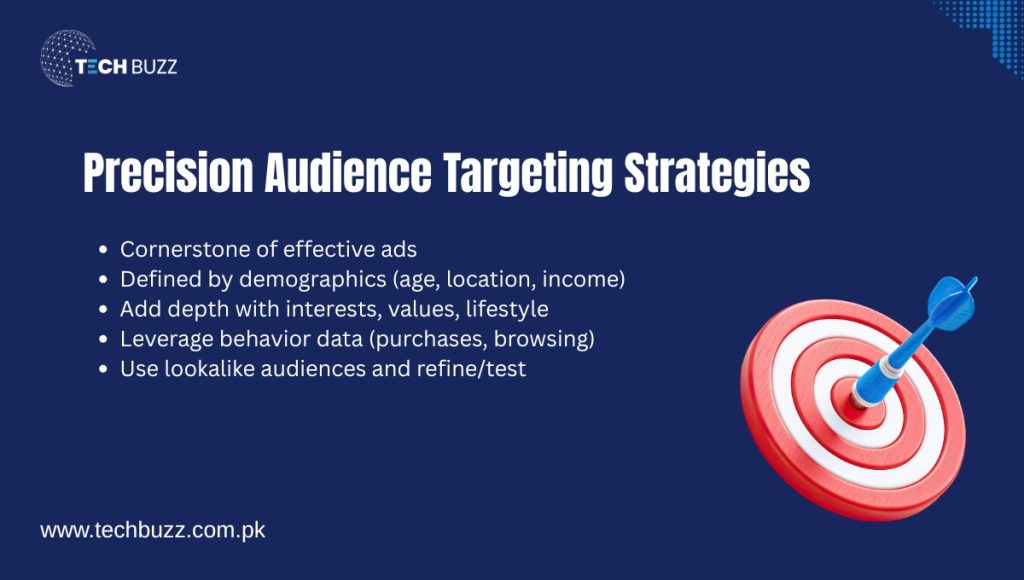
Audience targeting is the cornerstone of effective social media advertising, ensuring your efforts reach those most likely to engage with your brand. To begin, define detailed audience segments based on demographics such as age, location, and income level – this builds a solid foundation for your strategy. Moving forward, layer in psychographic data such as interests, values, and lifestyle choices to add depth to your targeting. In addition, leverage behavioral insights, including past purchases, browsing history, and platform activity, to identify high-intent users. Not only that, but lookalike audiences can expand your reach by connecting you with people similar to your existing customers. Furthermore, regularly refine your segments based on campaign performance data. Last but not least, test different combinations to find which audience targeting groups deliver the strongest results for your goals.
Lead Generation Leads
Lead generation ads are a powerful tool for capturing user information directly on social platforms, eliminating the need for external landing pages. To kick things off, these ads present pre-filled forms that make it easy for users to sign up, subscribe, or request more information. In turn, this streamlined process boosts conversion rates significantly compared to traditional click-through campaigns. Additionally, platforms like Facebook, LinkedIn, and Instagram offer customizable form fields to collect exactly what you need – from names and email addresses to job titles and company details. What’s more, you can segment leads based on their responses to deliver personalized follow-up communications.
Beyond that, integrate lead gen ads with your CRM system to automate data management and nurture prospects effectively. To wrap up, A/B test form designs, copy, and targeting to optimize for higher lead quality and lower cost-per-acquisition.
Social Media ROI
Social media ROI is the ultimate metric for evaluating campaign value. It shows whether your advertising efforts deliver meaningful business results.
Define clear KPIs aligned to your goals – revenue from sales, cost per lead, or customer lifetime value. Track direct metrics like conversions and indirect indicators such as brand awareness.
Assign monetary values to non-sales outcomes. This gives a complete picture of your return. Use platform tools and third-party software to aggregate data across channels.
Compare results against your initial investment to calculate ROI percentage. Reallocate budgets to high-performing campaigns. Refine strategies that don’t meet targets.
PPC Metrics
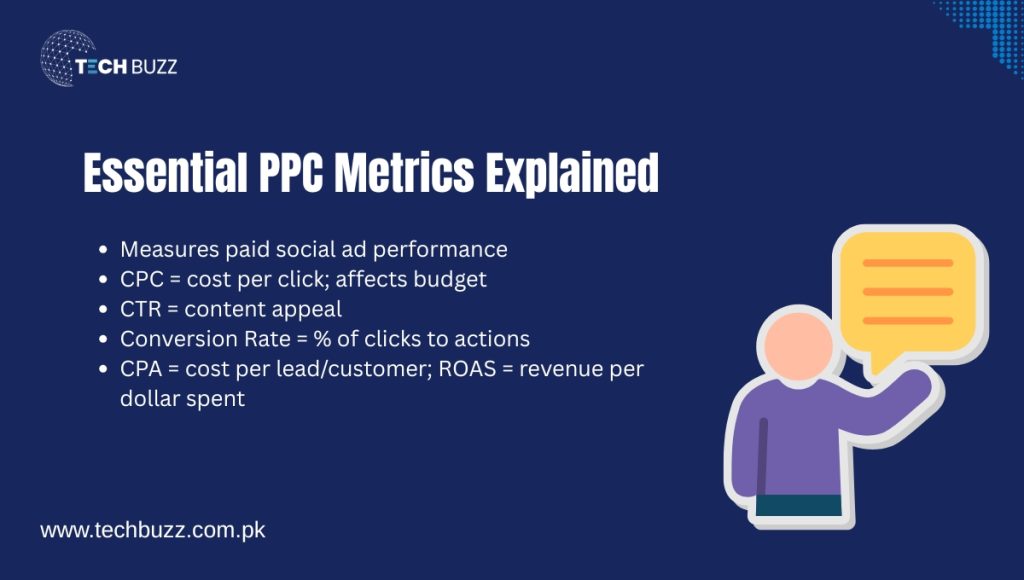
PPC metrics are essential for measuring the effectiveness of your paid social media advertising efforts. To begin, Cost-Per-Click (CPC) is the amount you pay each time a user clicks your ad, directly affecting your budget efficiency. Subsequently, the Click-Through-Rate (CTR) indicates how compelling your content is by measuring clicks relative to impressions. In addition, Conversion Rate tracks the percentage of clicks that lead to desired actions, such as purchases or sign-ups. Furthermore, Cost-Per-Acquisition (CPA) calculates the total cost to gain a new customer or lead. What’s more, Return-On-Ad-Spend (ROAS) measures revenue generated for every dollar spent. To finish, Quality Score assesses ad relevance and user experience, influencing both costs and placement – monitoring all these ensures your campaigns stay optimized and profitable.
Your Guidance at TechBuzz – Navigating Trends for Campaign Success
Your guidance at TechBuzz focuses on turning digital innovations into actionable steps for social media campaigns.
Understand which trends align with your brand. Don’t adopt every new tool just because it’s popular.
Test AI-powered ad optimization tools. These refine targeting and reduce manual workload.
Create short-form video content for platforms like Reels and Shorts. Keep it authentic and quick to capture attention.
Adapt to privacy changes. Shift focus to first-party data and contextual targeting.
Explore AR features for interactive brand experiences. These help your business stand out.
Allocate small test budgets for new tech. Measure results closely—scale only what delivers real value to your audience and goals.
Discover more about us and the most effective social media platform methods suited to your company’s objectives by collaborating with TechBuzz.
Conclusion
A winning social media advertising campaign combines clear strategy, targeted execution, and continuous optimization. Start with defined goals and a deep understanding of your audience to lay a strong foundation. Choose platforms and ad formats that align with your objectives – from LinkedIn for B2B outreach to lead gen ads for capturing contacts. Measure performance using metrics such as ROI and PPC, and stay agile by leveraging tech trends that deliver real value. Consistency in messaging, active community engagement, and data-driven adjustments are key to long-term results. By integrating all these elements, you can build campaigns that not only drive immediate outcomes but also foster sustainable growth for your brand. To explore how this shift can work for your business, visit us at TechBuzz. Take your online presence to the next level by partnering with TechBuzz today. Contact us now to learn more.
FAQS
How long does it take to see results from social media advertising?
Typically 4-8 weeks as campaigns optimize and audiences engage. Initial metrics may show sooner, but meaningful results build over time.
Which platform is best for my business?
Choose based on your target audience – LinkedIn for B2B, Instagram for consumer brands, etc. Match platform strengths to your business goals and customer demographics.
What should I focus on when starting social media advertising?
Begin by testing strategies and refining them based on performance data. Prioritize clear objectives and audience targeting to set strong foundations.